Season by season
January–February
The quiet winter season: the valley can be green and beautiful, but rain is a real possibility and outdoor plans are less dependable.
Wet weather can disrupt outdoor time, and the town has less of the warm-weather buzz.
March–May
Early spring is one of Sonoma’s better-value windows, with improving weather and a livelier landscape before summer demand takes over.
Weather is not yet reliably dry, and the Sonoma International Film Festival in March can abruptly fill this small town.
June–August
Warm, dry, reliably easy wine-country weather, generally with days in the upper 70s to mid-80s. Summer weekends are especially busy.
This is an expensive, crowded period: tasting rooms, restaurants and lodging fill up, roads are busier, and July 4 brings a pronounced Plaza-area surge.
September–October
Warm, dry harvest season, with the valley at its most energetic and winery activity at a high point.
The busiest and often priciest wine-country period. Expect fuller tasting rooms, heavier traffic and limited lodging—particularly on weekends and around the September festival.
November–December
After Thanksgiving, Sonoma returns to a quieter, better-value rhythm. Days are less reliably outdoor-friendly as winter weather returns.
Rain becomes more likely and daylight is shorter; outdoor certainty is lower than in summer or harvest season.
Events worth planning around
Sonoma International Film Festival · Usually March
A consequential crowd and reservation period in a small town. Book screenings, passes, lodging and any ticketed food-and-wine events ahead; avoid the dates if a quiet Sonoma visit is the goal.
July 4 Plaza celebration · July 4
The Plaza area sees an immediate crowd surge. Expect busier roads, lodging and restaurants, and do not treat it as an ordinary summer weekday.
Valley of the Moon Vintage Festival · Usually September
Adds festival crowds to already busy harvest season. Reserve lodging, winery appointments, drivers and popular meals earlier than usual.
Getting around
Walking
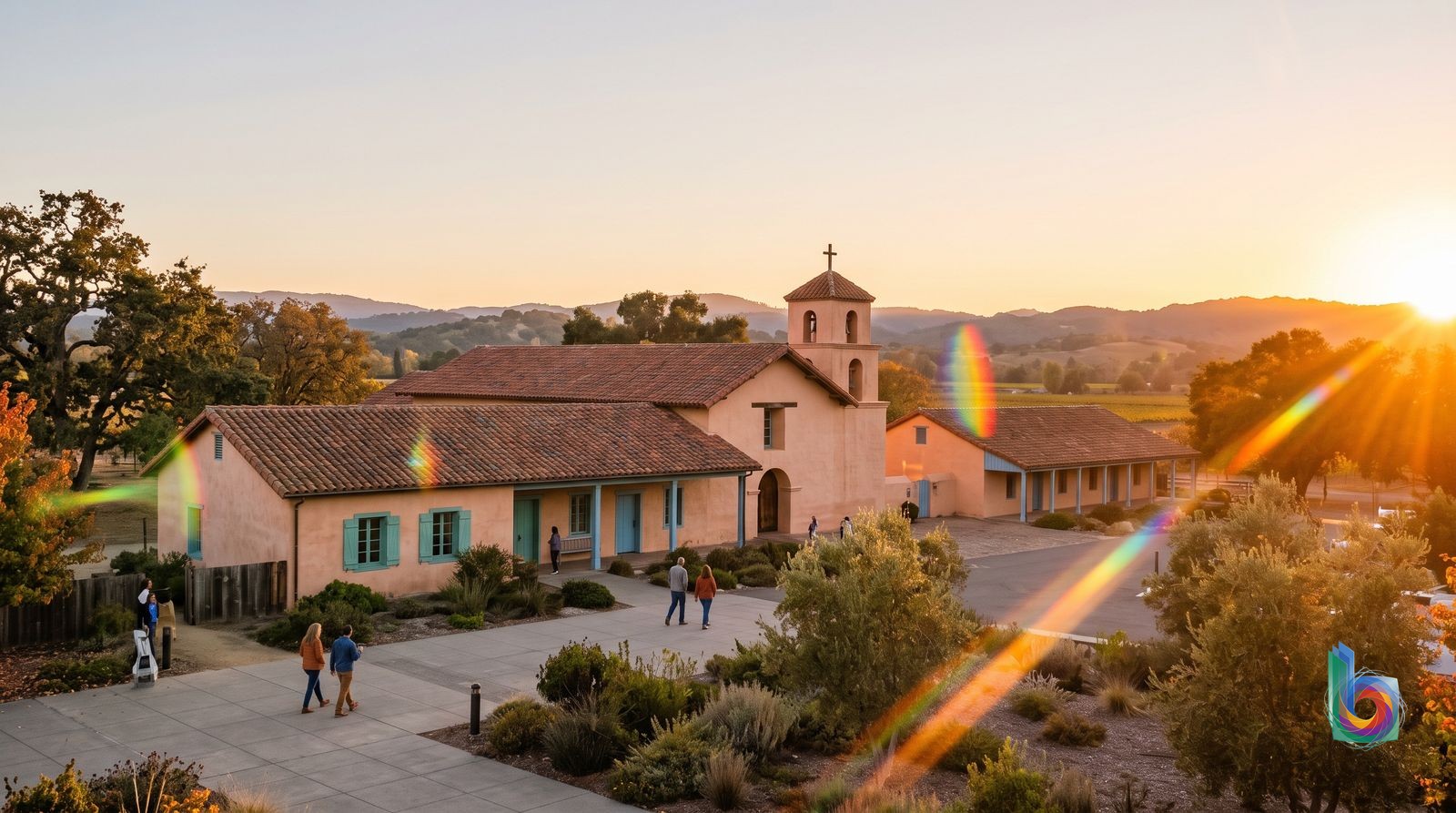
Sonoma Plaza—the Mission San Francisco Solano, Sonoma Barracks, shops, restaurants, tasting rooms and nearby historic streets—plus the nearer parts of Eastside Historic Residential and Westside.
Base yourself on or near the Plaza and treat it as a compact, one-day-on-foot town. The nearer east and west residential blocks are a pleasant walk back from dinner; Broadway South is walkable only for guests happy with a longer return.
Walking stops working well beyond the core. Much of El Verano is not a convenient walk from the Plaza; The Springs, Glen Ellen and Kenwood are separate destinations. Do not walk between wineries: valley roads can be fast, shoulderless and hot, and the return after tastings is a bad idea.
Rental car
A flexible Sonoma Valley itinerary, particularly winery days from El Verano, The Springs, Glen Ellen or Kenwood, and for travelers staying in Broadway South’s resort corridor or the farther reaches of the east and west sides.
Rent from your arrival airport and use it for daytime sightseeing, trailheads and rural lodging. It is the most practical way to link Sonoma town with Glen Ellen, Kenwood and dispersed wineries.
A rental car is only a good winery tool if one person will remain completely sober. Rural roads are dark, rideshares are not a dependable fallback, and visible bags or wine purchases invite break-ins in winery lots and at trailheads.
Designated driver, private car service or organized wine tour
Winery-hopping when everyone wants to taste, especially from Sonoma Plaza, Broadway South, Glen Ellen and Kenwood, where a spontaneous ride home is not something to assume.
Book the driver, car service or tour when booking winery appointments—not after the first tasting. It is the sensible alternative to assigning a sober driver and avoids trying to piece together rural rideshare trips.
This requires advance planning and adds cost; it is not an on-demand transport network. Late-night pickup from a winery or after dinner can be thin, particularly outside central Sonoma and in Glen Ellen or Kenwood.
Sonoma County Transit bus
A limited, schedule-dependent connection along the Highway 12 valley corridor—useful for a simple town-to-town trip between central Sonoma, El Verano, The Springs, Glen Ellen or Kenwood when time matters less than flexibility.
Check the current schedule before committing and regard the bus as a connector rather than a sightseeing service. It can help reach parts of the valley, but build an itinerary around fixed departure times.
It is not a credible winery-hopping plan: stops, schedules and the spread-out nature of estates create too many gaps. It also does little for evenings, and there is no rail service to Sonoma.
Cycling
Short local rides around central Sonoma and, for confident riders who plan conservatively, a daylight outing from a nearby base.
Use a bike for a low-key local ride rather than as the backbone of a tasting itinerary. Start early in hot weather, carry water, and arrange a non-cycling return if alcohol is part of the day.
Attractive vineyard roads are not necessarily bike-friendly: protected infrastructure is limited, traffic can be fast, and summer heat is real. Cycling is especially poor after tastings or along arterial stretches in El Verano and The Springs.
Rideshare or taxi
A short in-town trip, an occasional dinner ride, or a pre-arranged airport transfer—not a full-day transport strategy.
Request ahead where possible and ask your hotel or restaurant to help arrange a car if timing matters. Treat a confirmed pre-booked car service as more reliable than app-based pickup for winery days.
Coverage is thinner than in San Francisco and can be unreliable late at night or from wineries. Do not count on a quick pickup in The Springs, Glen Ellen or Kenwood, or after dinner outside the Plaza.
Safety: Sonoma is generally low-key, but make a sober transport plan before winery tastings and leave nothing visible in your car—rural roads are dark and rideshares can be unreliable after dinner.
Book before you land
Winery tastings and tours that are part of your itinerary—especially appointment-only estates, seated tastings, weekends, holidays and September–October harvest weekends. Book 1–2 weeks ahead as a baseline; reserve earlier for a fixed Saturday, a private tour, or a group. · A designated driver, private car service, or organized wine tour. This is the reservation that prevents the bad decision later; make it when you book the wineries, not after the first tasting. · Sonoma International Film Festival screenings and passes in March, plus ticketed food-and-wine events during major festival weekends. These can be capacity constrained in a town of this size. · Do not panic-book the historic Plaza sites: Mission San Francisco Solano, the Sonoma Barracks and Vallejo-related sites are not the kind of major-city attractions that routinely require advance timed entry. Check current hours, however, particularly outside peak season.
- Sonoma is more casual than Napa, but not cheap. “Sonoma Casual” means polished informal clothing is normal; tasting rooms and serious restaurants still reward reservations, especially Friday through Sunday.
- Make a firm drinking-and-driving plan. Tasting pours add up quickly, rural roads are dark, and there is no dense late-night taxi network to rescue an improvised itinerary. One sober driver, a hired driver, or a tour—choose one before leaving town.
- The Plaza is unusually permissive: visitors may picnic with wine or beer there from dawn to dusk. Keep it contained to the Plaza, clean up, and do not assume the same rule applies on streets, at trailheads, or at wineries.
- Tip as you would elsewhere in the United States: roughly 18–22% for table service, and tip drivers. Wine-tasting fees are commonly separate from purchases and may or may not be waived; ask rather than assuming.
- Do not plan to walk between wineries. Distances look modest on a map, but valley roads can be fast, shoulderless and hot; save walking for the Plaza and its adjacent historic streets.
- Sonoma is generally low-key rather than big-city-dangerous, but car break-ins remain avoidable: leave no bags, tasting purchases, or visible valuables in a parked vehicle—especially at trailheads and winery lots.
Worth leaving the city for
Glen Ellen and Jack London State Historic ParkHalf day by car; allow 20–30 minutes each way from Sonoma Plaza, or most of a day if you hike and linger over lunch.
This is the best short escape when another tasting room sounds like work. Glen Ellen has a genuinely tiny center, while Jack London State Historic Park adds the writer’s ranch, history and proper oak-woodland hiking—substance Sonoma itself cannot supply in one compact stop.
PetalumaHalf day to full day by car; roughly 35–45 minutes each way, traffic dependent.
Go west for a different kind of Wine Country town: a walkable historic downtown arranged around the Petaluma River, independent shops and an artsier, less resort-polished feel. It beats staying in Sonoma if you want architecture, browsing and lunch rather than another vineyard.
Bodega Bay and Goat Rock BeachFull day by car; roughly 1¼–1½ hours each way to Bodega Bay/Goat Rock, before coastal-road stops.
Sonoma’s inland heat and vineyard scenery are not the whole county. The Pacific coast delivers the dramatic reset: cold air, headlands, beaches and big-water views. Choose this over an extra city day when the weather is clear; it is not a quick add-on, and fog can erase the views.
Armstrong Redwoods State Natural ReserveFull day by car; about 1¼–1½ hours each way from Sonoma, depending on route and traffic.
For redwoods, skip pretending that Sonoma Plaza is a nature destination. Armstrong offers the tall, shaded grove experience that the dry Sonoma Valley cannot, and pairs naturally with a Russian River-area lunch. It is worth the drive only if you want forest over wine.