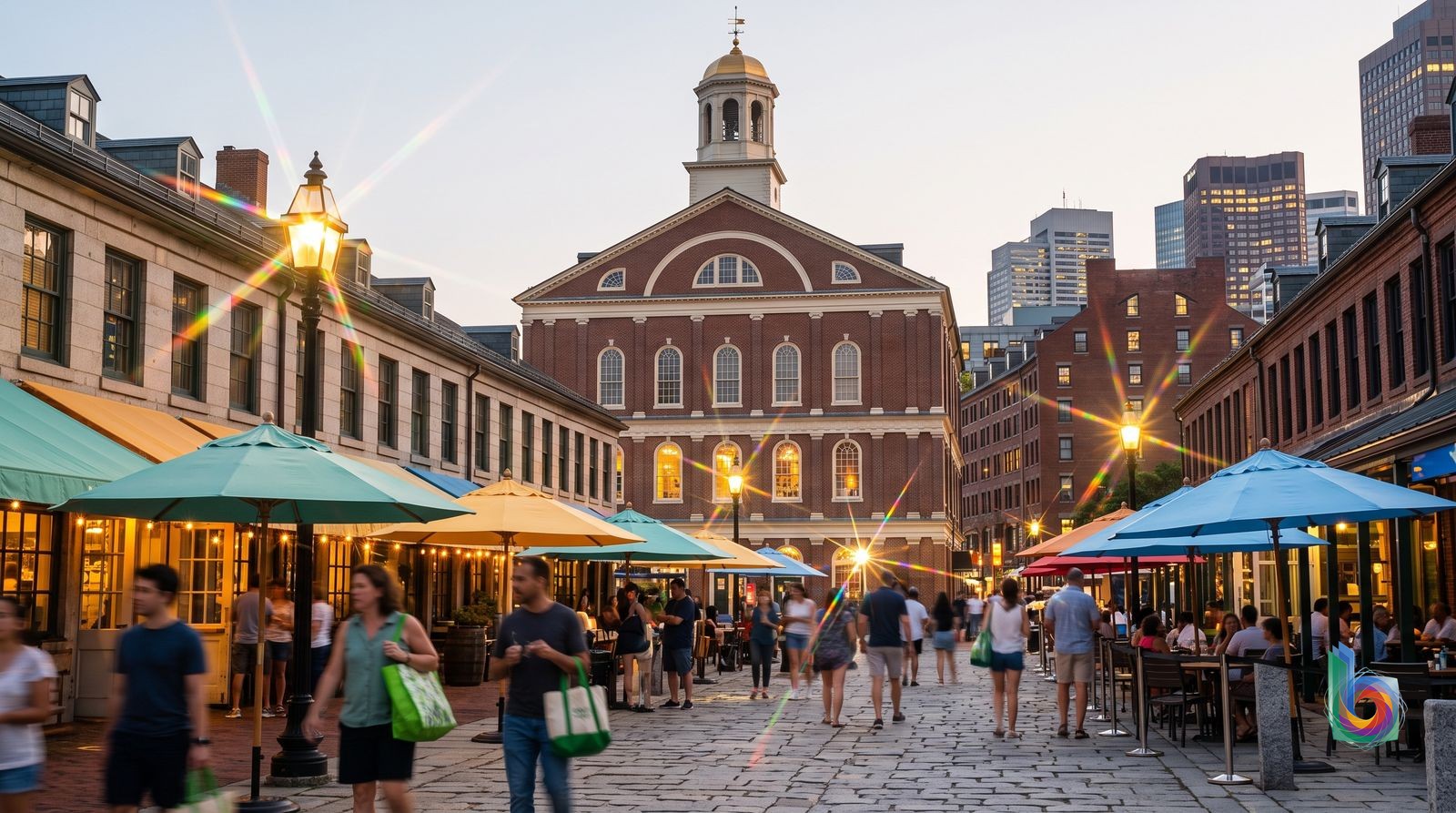
First visit? Stay in Back Bay.
Back Bay is the best first-visit compromise: it has Boston’s strongest concentration of full-service hotels, easy Green and Orange Line access, Back Bay commuter rail, and walkable access to the Public Garden, Beacon Hill, the South End, and much of downtown. It is expensive and polished rather than especially local, but it makes a short Boston trip notably easier than more atmospheric but less connected alternatives.
luxury →
Boston’s most reliable luxury base: the deepest hotel inventory, Newbury Street and Copley dining/shopping, handsome streets, and transit that does not require planning the day around one branch of the T. Choose Beacon Hill instead only if character and quiet matter more than hotel choice and luggage-friendly streets.
value →
This is the plausible lower-cost trade-off for travelers willing to swap central convenience for casual food, music, and a student-heavy setting. Stay near the Green Line B branch and accept that it is slow into downtown; it is not the right money-saving choice for a first-timer with only a weekend.
family →
Families get central, manageable walks to the Public Garden and Common, a broad choice of hotels and restaurants, and straightforward T access without staying amid North End crowds or Fenway game-day noise. The drawback is cost; Beacon Hill is prettier but less practical with strollers and luggage.
nightlife →
For restaurant-led evenings, LGBTQ+ life, and a real neighborhood atmosphere, the South End is more rewarding than Back Bay’s retail polish or the Financial District after work. Pick a location with a reasonable walk to an Orange Line station; transit is less effortless here than the map suggests.
quiet →
Beacon Hill offers the most convincing central escape: residential brick streets, Charles Street, the river, and easy walks to the Common and downtown. It is expensive, hilly, and sparse on hotels, so it suits travelers who value atmosphere over convenience and late-night options.
rail-day-trips →
Back Bay combines Orange and Green Line access with Back Bay commuter-rail service, while still putting major Boston sights within walking distance. It is a far better day-trip base than the Seaport, East Boston, or outer Green Line neighborhoods, where getting to the rail network adds friction.
return-visitor →
Cambridge gives a repeat visitor university architecture, bookstores, museums, independent dining, and a more day-to-day local rhythm than the Freedom Trail core. Stay close to the Red Line—Harvard, Central, or Kendall/MIT—because the walk into Boston is substantial and Kendall becomes quiet after work.
Avoid sleeping near The immediate Faneuil Hall–Quincy Market hotel zone: It is undeniably central, but the crowds are constant and much of the dining is tourist-oriented. Downtown is a strong practical base overall; this specific pocket is a poor choice for travelers seeking good-value dinners or a neighborhood feel.
Avoid sleeping near Financial District office-blocks away from Downtown Crossing: These blocks can be extremely convenient by day but empty out after offices close and on weekends. Choose Back Bay or the South End if you want to walk out of the hotel into dinner, drinks, and street life.
Avoid sleeping near Seaport around the convention center: This works well for an event at the Boston Convention & Exhibition Center, but leisure travelers often find it expensive, corporate, and farther from historic Boston than it looks. Silver Line service helps, yet it is not a substitute for being on the central subway spine.
The neighborhoods
Pick the areas you want to be around — the hotels and tables below narrow to them.
Stay here Fine base Visit, don't sleep
Back BayFirst-timer default
Polished brownstones, shopping, central convenience
Boston’s easiest all-round hotel district: handsome Victorian streets, Copley Square, Newbury Street shopping, the Public Garden edge, and a deep bench of restaurants and hotels. It is affluent, busy, and genuinely convenient rather than especially intimate.
Vs. others: Pick Back Bay over Downtown if you want better hotels, dining, and an evening stroll; pick Downtown over Back Bay if Freedom Trail sights are your overriding priority.
Excellent T coverage: Green Line stations at Copley, Arlington, and Hynes Convention Center; Orange Line at Back Bay, plus Back Bay commuter-rail service. The Public Garden, Beacon Hill, South End, and much of downtown are walkable.
Best for: first-timers, luxury, families, foodies, rail-day-trips
Hotels and restaurants are expensive. · Newbury Street can feel more like an upscale shopping corridor than a local neighborhood. · Fenway event traffic and peak-season crowds can affect the western end.
See hotels in Back BayDowntown & Financial DistrictExcellent base
Freedom Trail core, practical and hectic
This is the compact historic center around Boston Common, the Old State House, Faneuil Hall, Government Center, and the office-heavy Financial District. It is the most efficient place to tick off headline sights, but its working-city character fades quickly after office hours.
Vs. others: Pick Downtown over the North End if you want the shortest walk to the Freedom Trail and Boston Common; pick the North End if dinner-and-evening atmosphere matters more than transit convenience.
Among Boston’s best-connected areas: Park Street links the Red and Green lines, Downtown Crossing links Red and Orange, and Government Center links Green and Blue. The Freedom Trail core is very walkable.
Best for: first-timers, families, rail-day-trips, short stays
Office blocks can be quiet at night and on weekends. · Faneuil Hall and Quincy Market are crowded and dining there is often tourist-oriented. · The street pattern is confusing even over short distances.
See hotels in Downtown & Financial DistrictNorth EndAcceptable base
Italian-American lanes, history, constant demand
Boston’s dense old Italian-American quarter is where travelers come for Hanover Street, cannoli, waterfront proximity, and several Freedom Trail stops. It is compelling on foot, but it is a living neighborhood carrying a relentless visitor load.
Vs. others: Pick the North End over the Seaport if you want historic streets and independent-feeling Italian dining; pick the Seaport if you prefer modern hotels, wider sidewalks, and newer museums.
Haymarket on the Orange and Green lines is the principal T access; Aquarium on the Blue Line is also useful. Downtown, the Harborwalk, and Charlestown ferry connections are reachable on foot, though streets are tight and indirect.
Best for: foodies, first-timers, couples, return-visitors
Hanover Street is crowded, especially at meal times and weekends. · Restaurant quality and value vary widely in the tourist crush; queues are common. · Hotel choice is limited, and street noise can be real.
See hotels in North EndBeacon Hill & Charles StreetExcellent base
Historic, compact, beautiful, inconveniently expensive
A small hill of brick rowhouses, gas lamps, steep lanes, the Massachusetts State House, and Charles Street shops beside the Common and Charles River. It is Boston at its most photogenic, but it is residential and not a broad nightlife or hotel district.
Vs. others: Pick Beacon Hill over Back Bay if you want old Boston character and a quieter base; pick Back Bay if you need more hotel choice, easier rail access, and more dining range.
Charles/MGH on the Red Line sits at the north edge; Park Street and Arlington are walkable. Boston Common, downtown, and the river paths are close, but Beacon Hill itself is steep and paved with uneven brick.
Best for: luxury, quiet, couples, first-timers
The hill, cobbles, and narrow sidewalks are awkward with luggage, strollers, or limited mobility. · Accommodation is scarce and costly. · It can feel hushed rather than lively after dinner.
See hotels in Beacon Hill & Charles StreetSouth EndExcellent base
Brownstones, serious dining, lived-in city
The South End pairs Victorian brick streets with a strong restaurant scene, galleries, LGBTQ+ life, and the SoWa market area. It feels more residential and food-focused than Back Bay, while still being close to the center.
Vs. others: Pick the South End over Back Bay if you want better neighborhood dining and less retail polish; pick Back Bay if you want more direct T access and a simpler first visit.
The Orange Line at Back Bay, Massachusetts Avenue, and Tufts Medical Center can be useful depending on location; several key stretches rely more on walking and buses than on a station at the door. Back Bay and downtown are walkable, but not next-door.
Best for: foodies, nightlife, LGBTQ+ travelers, return-visitors, luxury
It is expensive. · Transit coverage is less effortless than its map position suggests. · SoWa activity is not an all-week replacement for a full-time attraction district.
See hotels in South EndFenway–KenmoreAcceptable base
Ballpark energy, museums, students, hospitals
Fenway Park gives the area its identity, but this is also a dense university, medical, and cultural district around the Museum of Fine Arts and the Emerald Necklace. It is useful and animated, though its mood changes sharply with the baseball and academic calendars.
Vs. others: Pick Fenway–Kenmore over Allston if you want museums, park access, and easier links to the center; pick Allston if lower-cost casual food and student nightlife matter more than polish.
The Green Line’s B, C, and D branches serve Kenmore/Fenway-adjacent areas, with the Fenway stop on the D branch. Back Bay is walkable; downtown usually requires a T ride or a longer walk.
Best for: sports fans, value, students, families, museum-goers
Game days bring crowds, noise, road closures, and higher hotel demand. · Some blocks feel dominated by hospitals, campuses, and traffic rather than neighborhood life. · The Green Line can be slow and crowded.
See hotels in Fenway–KenmoreSeaportAcceptable base
New waterfront, big hotels, corporate gloss
The Seaport is Boston’s redeveloped waterfront: contemporary hotels, the Institute of Contemporary Art, the convention center, Harborwalk views, and an increasingly polished dining scene. It is convenient for events and harbor time, not for Boston’s oldest texture.
Vs. others: Pick the Seaport over the North End if you want modern waterfront hotels and the ICA; pick the North End if you want history, compact streets, and more character per block.
The Silver Line links the district toward South Station and the airport; much of the area is also walkable from South Station, though distances are longer than they look. Downtown is reachable on foot across the Fort Point channel but is not right outside most hotels.
Best for: luxury, families, convention travelers, waterfront lovers
It can feel corporate, newly built, and expensive. · Transit is less direct than the central subway map suggests. · Restaurants and bars skew pricey, and convention crowds can dominate.
See hotels in SeaportCharlestownAcceptable base
Revolutionary landmarks, village feel, uphill walks
Charlestown is a compact, historically layered neighborhood across the river from the North End, anchored by the USS Constitution and Bunker Hill Monument. It has a more residential, small-town feel than central Boston and is particularly rewarding for history-minded walkers.
Vs. others: Pick Charlestown over Beacon Hill if you want maritime and Revolutionary sites with a more residential feel; pick Beacon Hill if you want easier access to the Common, downtown, and restaurants.
The Orange Line at Community College is useful for the western side; the MBTA ferry provides a scenic but limited alternative near the waterfront. The North End is walkable via the bridge, but Bunker Hill is uphill and central Boston is not as close as it appears.
Best for: families, quiet, history lovers, return-visitors
Hotel inventory is limited. · Bunker Hill and surrounding streets involve real climbs. · Evenings are quiet, with fewer dining and drinking options than the North End.
See hotels in CharlestownCambridge (Harvard Square–Central Square–Kendall Square)Excellent base
University city, bookstores, labs, real local life
Across the Charles, Cambridge delivers Harvard’s historic core, MIT, bookstores, museums, independent restaurants, and a less tourist-saturated day-to-day rhythm than central Boston. Harvard Square, Central Square, and Kendall Square have distinct personalities, so choose a hotel close to the stop you will use.
Vs. others: Pick Cambridge over Back Bay if you want university culture and a more local evening scene; pick Back Bay if this is your first Boston visit and you want to walk to the core sights.
The Red Line connects Harvard, Central, and Kendall/MIT directly with Park Street, Downtown Crossing, and South Station connections. Harvard Square is lively and walkable; the walk to Boston proper is substantial, though the river crossings are pleasant.
Best for: return-visitors, families, foodies, rail-day-trips, academic travelers
It is often no cheaper than Boston proper. · Harvard Square is busy and can feel commercial around its most famous corners. · Kendall is polished and convenient but quiets down after work.
See hotels in Cambridge (Harvard Square–Central Square–Kendall Square)Allston–BrightonAcceptable base
Student-heavy, casual, better-value west side
Allston is the scruffier, busier student district of cheap-ish eats, music venues, and shared apartments; Brighton becomes more residential farther west. It is a credible money-saving base if expectations are realistic, rather than a classic sightseeing neighborhood.
Vs. others: Pick Allston–Brighton over Fenway–Kenmore if you prioritize casual food, music, and lower accommodation costs; pick Fenway if you want museums, Fenway Park, and a faster route to central sights.
The Green Line B branch runs along Commonwealth Avenue toward Kenmore and downtown, but it is a street-running light-rail route and can be slow. Brighton’s western reaches are less convenient; buses fill gaps.
Best for: value, nightlife, students, return-visitors, budget
The student population brings late-night noise and moving-day chaos around September. · The ride into downtown can take longer than map distance implies. · Hotel options are limited and the streetscape is not uniformly charming.
See hotels in Allston–BrightonJamaica PlainAcceptable base
Leafy, independent, far from the postcard
Jamaica Plain is a diverse, green, locally oriented neighborhood with Jamaica Pond, the Arnold Arboretum, and independent businesses around Centre Street. It is a satisfying antidote to central Boston, especially for a longer stay, but not a sightseeing shortcut.
Vs. others: Pick Jamaica Plain over Back Bay if parks and residential calm matter more than being near every sight; pick Back Bay if you want to spend most of your trip walking the historic core.
The Orange Line serves the neighborhood at stations including Green Street, Stony Brook, and Forest Hills; central Boston is a straightforward ride, not a quick walk. The Arboretum and pond are spread out enough that walking time matters.
Best for: quiet, families, return-visitors, outdoorsy travelers, foodies
It is too far out to be the most efficient first-time base. · Lodging choices are limited. · The neighborhood’s attractions are dispersed rather than clustered around one station.
See hotels in Jamaica PlainEast BostonAcceptable base
Airport-adjacent, immigrant food, skyline views
East Boston is an immigrant neighborhood across Boston Harbor, useful for Logan Airport and rewarding for Latin American food, waterfront paths, and downtown skyline views. It feels like a separate community, not an extension of the Freedom Trail zone.
Vs. others: Pick East Boston over the Seaport if airport access and immigrant-run restaurants matter more than polished waterfront development; pick the Seaport if you want museums, convention access, and central-city hotels.
The Blue Line links Maverick and Airport with Aquarium, Government Center connections, and downtown; airport shuttles serve terminals. Maverick is the useful station for neighborhood restaurants and skyline walks, while attractions in central Boston still require a ride.
Best for: value, airport overnights, foodies, return-visitors
Aircraft noise and airport traffic are unavoidable in places. · It is not walkable to the major historic sights. · The Blue Line does not directly serve Back Bay or South Station.
See hotels in East BostonBrookline (Coolidge Corner–Washington Square)Acceptable base
Leafy, polished, practical beyond downtown
Just outside Boston’s boundary, Brookline offers a calmer residential base with good restaurants, Jewish cultural life, and the usable retail strips of Coolidge Corner and Washington Square. It feels more settled than Allston and less visitor-oriented than Back Bay.
Vs. others: Pick Brookline over Allston–Brighton if you want a quieter, more polished residential stay; pick Allston if you want student energy, music, and more casual late-night options.
Green Line C trains run through Coolidge Corner and Washington Square toward Kenmore and downtown; the D branch serves parts of Brookline farther south. Service is convenient but slower than staying on the central subway spine.
Best for: families, quiet, foodies, return-visitors, value
It is outside Boston proper and lacks major must-see sights for most first visits. · Green Line travel can be slow and crowded. · Evenings are comparatively subdued.
See hotels in Brookline (Coolidge Corner–Washington Square)Where to stay
Hotels in Boston
XV BeaconHotel4.7 · 823 reviews
Canopy by Hilton Boston DowntownHotel · $$4.5 · 985 reviews
The Ritz-Carlton, BostonResort · $$$$4.4 · 991 reviews
Hyatt Regency BostonHotel · $$$4.3 · 3,903 reviews
Marriott Vacation Club at Custom House, BostonHotel4.7 · 757 reviews
Hyatt Centric Faneuil Hall BostonHotel · $$$4.2 · 733 reviews