Season by season
January–March
Quiet, cool and often atmospheric, with the village at its least crowded. Many small businesses, restaurants and rural attractions run reduced hours or close.
Not the best first visit if you want reliable restaurant choice, open attractions or a full Luberon itinerary.
April–May
One of the most sensible windows: generally pleasant walking weather, green landscapes and lighter crowds than summer.
Weather can still be changeable, and seasonal businesses may not all be operating at full summer rhythm.
June–mid-July
Lavender-photo season around Sénanque, especially from mid-June, with long sunny days and rising heat. This is also Gordes at its most congested.
Expect photo-stopping traffic, crowded narrow roads and difficult parking. Visit Sénanque early or late; midday is the least rewarding time.
Mid-July–August
Peak summer: frequently above 30°C, intensely busy and hard on anyone tackling steep cobbled lanes in the afternoon heat.
The worst period for parking, road congestion and heat. Car hire can also be expensive; do not expect a relaxed, uncrowded village experience.
September–October
Another excellent practical season, with more comfortable temperatures, harvest-season landscapes and fewer crowds than high summer.
September can still be busy, particularly in good weather, and daylight shortens through October.
November–December
Quiet, cool and low-key, much like late winter; Gordes can feel beautifully atmospheric but operates on a reduced rural-season schedule.
Reduced restaurant, shop and attraction hours make this better for a self-contained stay than for a first visit built around sightseeing.
Events worth planning around
Gordes Tuesday morning market · Every Tuesday morning
The market materially increases congestion in the village: parking is at its hardest and the lanes are busiest. Arrive early, park outside the historic core and carry some cash for smaller purchases.
Getting around
Walking
Exploring the Gordes Historic Hilltop Core once you have arrived: the château area, stone lanes, galleries, terraces and dinner in the village. Allow an hour or two rather than treating it as an all-day walk.
Park outside or below the historic center, then walk in. Wear shoes with real grip, carry water and expect uphill returns from the parking areas.
The core is steep and cobbled, especially punishing in summer heat and difficult for limited-mobility travelers. Walking stops working well on the Village Fringe and Viewpoint Roads, where apparently close addresses can mean steep, roadside climbs with no continuous pavement; it is also not a practical link to Village des Bories, Sénanque Valley, Les Imberts or Les Gros after dark.
Rental car
The default—and close to essential—for a Luberon stay: Sénanque Abbey, Village des Bories, Roussillon, wineries, markets and the scattered hamlets all become realistic on your own schedule. It is particularly useful from Les Imberts, Route de Murs and Northern Gordes, Les Gros and Coustellet–Maubec.
Collect at Avignon TGV, Marseille Provence Airport or, if arriving on a regional train, Cavaillon. Park outside Gordes’ historic center and walk the final stretch. Start early in July and August for parking; use the D177 to Sénanque slowly and patiently.
Do not try to thread a large car through the historic core’s narrow lanes or assume your hotel has doorstep access. Parking is pressured in the core, on market-day Tuesday, and around Sénanque; the abbey road is narrow, busy with cyclists and walkers, and clogged by photo-stopping traffic in lavender season.
Taxi or pre-booked private transfer
A one-way arrival from Avignon TGV, Avignon Centre or Cavaillon; a dinner when you do not want to drive; or reaching Sénanque Valley if you are not renting a car. It is the realistic fallback for car-free stays in the Historic Hilltop Core.
Arrange transfers in advance through your accommodation or a reputable local operator, especially from rail stations and for return journeys. Confirm the pickup point: cars may not be able to collect directly at every central hotel entrance.
Gordes is not a city with an all-day taxi rank or dependable on-demand supply. This option becomes weak late at night and in dispersed areas—Village des Bories and Fontblanche, Route de Murs, Les Gros, Saint-Pantaléon and Sénanque Valley—unless the return is booked; frequent taxi use will quickly cost more than a rental car.
Regional bus
Only a carefully planned, light-luggage connection or a very limited car-free itinerary. It can supplement a stay if you are flexible and have checked the current timetable, rather than serving as the backbone of a Luberon holiday.
Check current regional schedules before committing to accommodation or a day trip, and build in generous slack. For a rail-oriented alternative, base in L'Isle-sur-la-Sorgue, which has a useful regional station, then arrange the final leg to Gordes by car, taxi or a specifically checked bus.
Service is too thin and infrequent to plan a normal sightseeing holiday around, particularly with luggage or on evenings and weekends. It does not solve access to Sénanque Valley, Village des Bories and Fontblanche, Route de Murs, Les Imberts, Les Gros or Saint-Pantaléon; there is no rail station in Gordes and no metro or tram network.
Safety: Gordes is generally low-risk, but its steep cobbled lanes and summer heat demand grippy shoes and water, and you should leave nothing visible in a parked car at viewpoints or trailheads.
Book before you land
Abbaye de Sénanque guided visit: reserve online ahead for late spring through summer, particularly if you want a specific language or time. The abbey is an active monastic site, so visit arrangements can change; do not assume a walk-up tour will fit your schedule. · There is no Gordes equivalent of a major-city museum ticket that universally sells out weeks ahead. Village des Bories and the Musée du Verre et du Vitrail are normally better treated as timetable checks rather than panic-booking targets; confirm seasonal opening days before driving out.
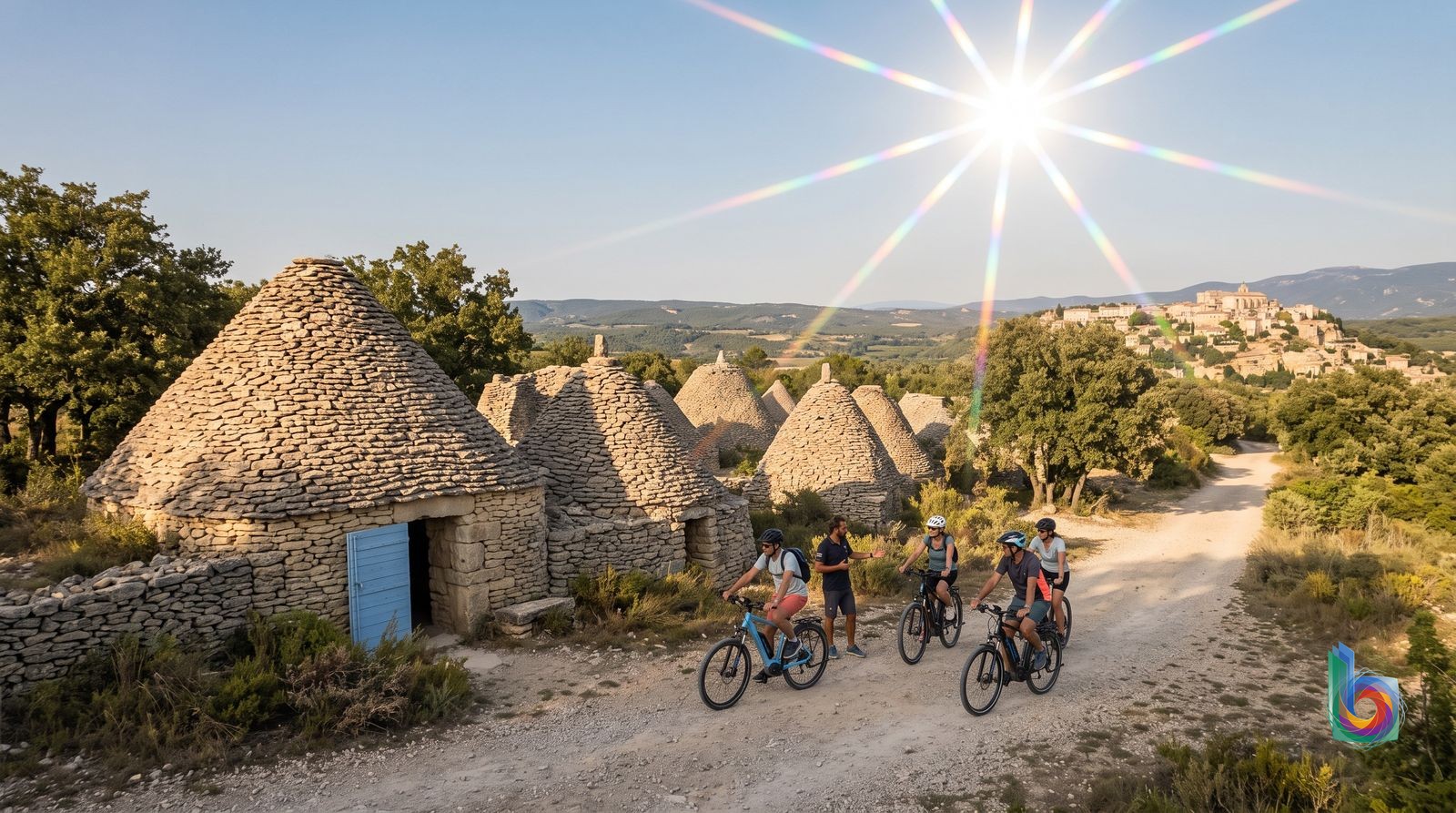
- Gordes is famous for the single postcard view of a limestone village on its rock, but the lived reality is a very small, spread-out commune in the Luberon. Give the village core a half-day at most; add the abbey and Bories only if you have a car and a full day.
- Tuesday morning is Gordes market day. It is worth doing for the atmosphere and produce, but it is also the worst time to expect easy parking or uncrowded lanes. Arrive early, carry cash as a backup, and do not treat the market as a bargain hunt.
- Carry water, sun protection, and some cash. Cards are widely used in France, but rural stalls, small purchases, and occasional parking/payment quirks are easier with euros.
- The lanes are residential, not an open-air set. Keep voices down at night, do not block doorways for photographs, and ask before photographing people or shop displays.
- Pickpocket risk is modest compared with Paris or Marseille, but unattended bags in cars are an avoidable problem at viewpoints and trailheads. Leave nothing visible in a parked vehicle.
- At Sénanque, dress and behave as you would in a working religious community: quiet voices, modest coverage inside, and respect any areas closed to visitors. The lavender field is the photograph; the abbey is not a theme park.
Worth leaving the city for
Roussillon and the Sentier des OcresHalf day by car — roughly 20–30 minutes each way from Gordes, plus 2–3 hours on the ground.
This is the obvious pairing with Gordes, not a duplicate: Roussillon’s iron-red and ochre cliffs are a complete visual change from Gordes’s pale limestone. Walk the marked ochre trail, then wander the village; combine it with Gordes only if you start early, as both are heavily visited in season.
L’Isle-sur-la-SorgueHalf day by car — about 35–45 minutes each way; allow longer on market days and in summer traffic.
Go for the Sorgue canals, antique shops and market-town life rather than another perched-stone village. It is especially worth it on market days; on an ordinary afternoon, the antiques focus can feel expensive and repetitive.
AvignonFull day — around 50–60 minutes each way by car, plus time to park and walk into the historic centre.
Avignon earns the journey because it supplies what Gordes cannot: a real small city, the Palais des Papes, medieval walls and the Rhône. It is the best choice when you want history and substance rather than another photogenic village.
AptHalf day, best on market day — approximately 30–40 minutes each way by car.
Choose Apt for a working Provençal market town rather than a polished postcard. Its market is the point; otherwise, it is less compelling than Roussillon or Avignon for a first-time visitor.
LourmarinHalf to full day by car — about 45–60 minutes each way, depending on the route.
Lourmarin offers a softer, more lived-in Luberon counterpoint to Gordes: a village below the ridges rather than another dramatic hilltop, with a Renaissance château and a more relaxed café-and-market rhythm. It works well combined with a scenic drive across the Luberon.