Season by season
December–February
Quiet, cold winter with possible snow and ice. This is a good time to concentrate on restaurants, breweries and museums rather than waterfront sightseeing.
Some seasonal attractions and tours shut down; the Portland Observatory is generally a warm-season visit. Walking can be slippery and the waterfront feels exposed.
March–May
The cheaper but least dependable shoulder season: often raw, windy and foggy near the water, with changeable temperatures.
It is not reliably springlike, and seasonal attractions, ferry options and outdoor programming may still be limited. Bring a waterproof windproof layer.
June–August
Portland is at full summer strength, with the fullest restaurant and ferry schedules and the most dependable conditions for boats, islands and waterfront walking.
This is the most expensive and crowded period: expect high hotel rates, busy waterfronts, cruise and day-trip crowds, and advance demand for popular boat trips. Fog and sudden temperature drops still happen.
September–early October
The standout window: cooler, comfortable walking weather, good light, fewer peak-summer family crowds and the start of foliage.
It remains a popular period, particularly on weekends, and seasonal boat trips and the Portland Observatory can still need advance planning.
Mid-October–November
A quieter late-autumn shoulder period after the prime early-foliage window, with cooler days and increasingly variable weather.
Outdoor and boat-oriented plans become less dependable, daylight is shorter, and some warm-season attractions and services wind down.
Events worth planning around
Portland Hearts of Pine home matches at Fitzpatrick Stadium · During the club's home season; fixture dates vary.
Matches commonly sell out, especially weekend fixtures. Buy when the schedule opens if a match is central to the trip; supporters' sections 118–120 are standing, singing sections, and flags can obstruct views.
Getting around
Walking
A first visit based in Old Port or the Downtown Arts District. Old Port, Commercial Street, the Arts District, India Street, Casco Bay Lines, Munjoy Hill and the Eastern Promenade mostly sit within 20–35 minutes of one another on foot; the Back Cove loop is an excellent roughly 3-mile walk or run.
Treat the peninsula as a walking city. Walk downhill from the Arts District or West End to the harbor, then use a ride back if the hill—or luggage—makes the return unattractive. Wear shoes with grip for cobbles, winter ice and wet waterfront pavement.
The hills are real: the climb from Old Port/India Street to Munjoy Hill and from the waterfront to the West End can be tiring. Walking stops being practical for Deering and Woodfords Corner, Libbytown/Thompson’s Point, most of Back Cove and Cape Elizabeth; Bayside is close but has less pleasant, traffic-heavy walking routes.
Greater Portland METRO bus
Useful daytime connective transport rather than sightseeing: Route 5 for the Jetport, Route 1 between the Portland Transportation Center and downtown via Congress Street, and major corridors toward inland neighborhoods.
Use the bus when it directly matches your airport, train-station or neighborhood trip; local fares are about $2. Check the current schedule before committing, particularly on weekends or around an arrival time.
There is no metro or light rail, and buses are not a dependable late-night system. They work less well for a spontaneous evening from Old Port to the West End, East End/Munjoy Hill, Back Cove, Deering/Woodfords Corner or Libbytown; do not count on them after nightlife or performances.
Taxi or Uber/Lyft
Late dinners and bar closing, airport trips with luggage, getting back uphill to the West End or Munjoy Hill, and any trip beyond the compact peninsula. It is the sensible default from Old Port to Deering, Woodfords Corner, Thompson’s Point or Cape Elizabeth when you do not have a car.
Order through Uber/Lyft or use a taxi; share rides when possible. From PWM, a ride is generally 15–20 minutes and roughly $20–30 before tip. Build in extra time after Old Port bars close.
Demand rises late at night—especially around the 1am bar closing—and summer traffic can slow waterfront trips. A ride is easy enough for individual journeys, but several out-of-town excursions quickly make a rental car or organized tour better value.
Rental car
Trips where the coast is central: Cape Elizabeth and lighthouse outings, beaches, Freeport, Kennebunkport, or a multi-stop Maine itinerary. It also suits stays in Back Cove, Deering/Woodfords Corner or Libbytown/Thompson’s Point, where the city is less conveniently walkable.
Rent for the days you leave Portland rather than automatically for the whole trip. If you are staying downtown, collect it when you depart or use a tour for a single coastal day.
Do not rent purely for an Old Port weekend. Parking, one-way streets, summer traffic and narrow busy waterfront blocks make driving more hassle than help; it is particularly unnecessary in Old Port, the Arts District and India Street.
Casco Bay Lines ferry
Peaks Island and other Casco Bay island outings. It is also the defining transport advantage of the India Street/Eastern Waterfront area, a short walk from Old Port.
Use the scheduled ferry from the Portland waterfront; confirm the timetable and weather conditions before planning an island day. On Peaks Island, walking and bicycles fit the scale far better than a car.
It is scheduled transport, not an on-demand harbor shuttle. Ferry timing and weather create a real gap for island stays: mainland restaurants, flights and late-night plans all depend on making the crossing, and Peaks Island is much quieter outside summer.
Safety: Portland is generally comfortable to explore on foot, but after Old Port bars close at 1am, use well-lit streets or call a rideshare rather than lingering in the noisier waterfront crowds.
Book before you land
Portland Hearts of Pine matches at Fitzpatrick Stadium: these commonly sell out. Buy when the schedule opens, especially for weekend fixtures; supporters’ sections 118–120 are standing, singing sections and flags can obstruct views. · Summer Portland Schooner Company sails and popular Casco Bay boat excursions: reserve several days ahead for ordinary summer weekdays and 1–2 weeks ahead for weekends, holiday periods and sunset departures. · Lucky Catch Lobster Cruise: reserve ahead in July–August, especially for a family group or a preferred mid-day sailing. It is a good hands-on outing, not an essential Portland experience for every adult traveler. · Portland Observatory: it is seasonal and capacity is limited. Book ahead for a specific summer or fall time slot if the tower climb matters to you; otherwise do not over-plan it. · Portland Museum of Art and Victoria Mansion generally do not merit long-range booking for ordinary admission. Check their current hours instead—Victoria Mansion is seasonal, and museum schedules can vary.
- This is Portland, Maine—not Portland, Oregon. Search results and airport advice frequently mix them up; the relevant airport code is PWM, not PDX.
- Budget for Maine’s 5.5% sales tax and normal U.S. tipping: roughly 18–22% at sit-down restaurants and bars, plus a few dollars for taxi/rideshare drivers. Menu prices are not your final price.
- The Old Port is safe enough for normal city awareness, but bars must close at 1am. Around closing time the streets get louder and more chaotic; walk back via lit streets or call a ride rather than lingering for the atmosphere.
- Treat the waterfront as working infrastructure, not a theme park. Commercial Street still has fishing, freight and ferry activity; stay clear of operational piers and do not block docks for photos.
- Fog, wind and sudden temperature drops are common even on a warm-looking summer day. Bring a light waterproof/windproof layer for ferries, the Eastern Promenade and any lighthouse outing.
- For a no-cost Portland day, walk Old Port and Commercial Street, continue up Munjoy Hill to the Eastern Promenade and East End Beach, then loop Back Cove’s roughly 3-mile path. Add the Saturday-morning farmers’ market at Deering Oaks in season; it is a better use of free time than chasing a generic ‘free attraction.’
Worth leaving the city for
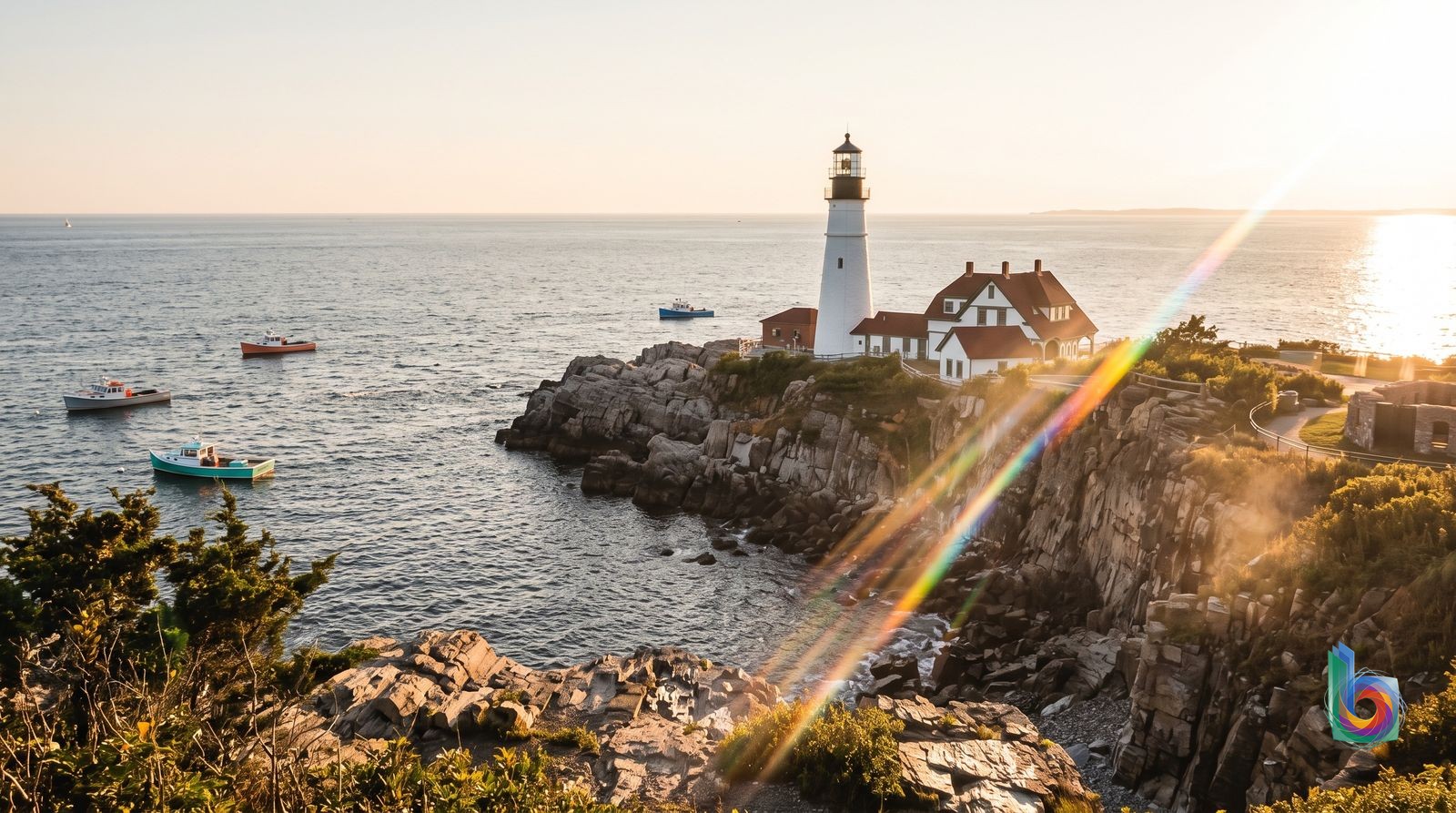
Cape Elizabeth — Fort Williams Park and Portland Head LightHalf day; allow roughly 30–45 minutes door to door each way from central Portland, plus time to walk the park.
This is the one essential escape: a dramatic working-coast setting and Maine’s signature lighthouse, rather than another round of Old Port browsing. Fort Williams is substantially more memorable than Portland’s small-city sights, especially in clear or stormy weather. Go by car or rideshare; it is not a practical public-transit outing.
Peaks Island via Casco Bay LinesHalf day to a relaxed full day; ferry terminal is walkable from the Old Port, then allow the sailing time and time around the island.
It gives you the Casco Bay experience that Portland’s waterfront only hints at: the ferry ride, island scale and a slower, residential Maine day. It is the best car-free excursion and works particularly well when you want sea air without committing to a long drive.
Bailey Island and Orrs IslandFull day; plan on about 1–1½ hours each way by car from Portland, before stops and traffic.
Go for the coastal drive and the unusual cribstone bridge between the islands—an actual piece of Maine engineering and landscape, not a manufactured attraction. This is a better use of a car than driving to generic outlet shopping.
KennebunkportFull day; roughly 45–60 minutes each way by car, with seasonal traffic potentially stretching the trip.
Worth leaving Portland for only if you want a more polished, old-money New England fishing-village contrast: beaches, antiques and a look toward the Bush family’s summer-estate area. It is charming, but more curated and less urban than Portland; skip it if your priority is food and city energy.