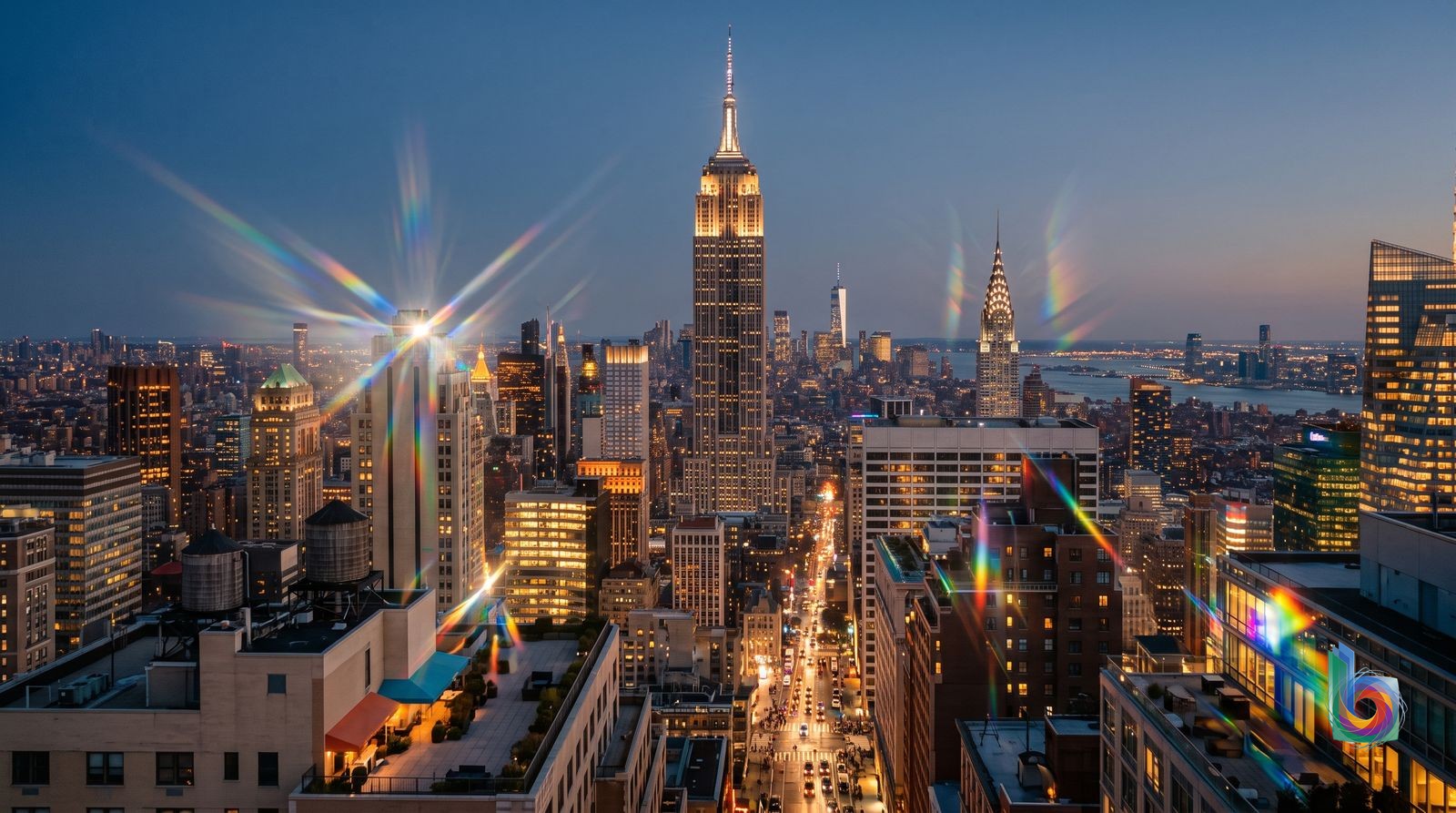
Season by season
January–February
Manhattan is cold, with short daylight and a comparatively quieter feel after the holiday rush.
Outdoor sightseeing is less pleasant, daylight is limited, and winter weather can disrupt plans.
March–late April
Spring arrives unevenly: expect cool days and rain before the reliably walkable late-April stretch.
Weather is changeable, and rain can undermine outdoor-heavy itineraries.
Late April–June
One of Manhattan’s best windows: generally walkable temperatures and long enough days for parks, neighborhoods and outdoor sightseeing. Spring rain remains a real possibility.
Demand builds through the season; late June Pride brings major crowd and street-closure distortion.
July–August
Summer can be hot and humid enough that an ambitious all-day walking plan becomes an indoor-museum day.
Humidity, heat, heavier tourist crowds and uncomfortable subway platforms make this a poor choice for visitors whose priority is long outdoor days.
September–October
The other top choice for a visit: walkable temperatures and excellent conditions for parks and neighborhood wandering. Autumn hotel prices are a real drawback.
September’s UN General Assembly can sharply worsen traffic and demand, while autumn hotel rates can be high.
November–December
November cools quickly; December is festive but increasingly crowded, especially around Midtown and major shopping streets.
The New York City Marathon affects early November, while the Christmas season brings serious crowding, traffic and pressure on hotel and attraction reservations.
Events worth planning around
NYC Pride · Late June, usually centered on the final weekend of the month
Expect exceptionally busy streets, parade-related closures and high demand around central Manhattan; avoid routing a car-dependent day through affected areas and reserve accommodation early.
United Nations General Assembly high-level week · September, typically during the General Assembly opening period
East Midtown security, street closures and traffic can be severe, and hotels may be more expensive or harder to book. It is a poor time to rely on taxis around Turtle Bay.
TCS New York City Marathon · Early November, usually the first Sunday
The route finishes in Central Park and affects cross-town movement and access around the park. Book lodging and timed plans early if your trip overlaps the race weekend.
Christmas and holiday season · Late November through early January, with peak pressure in December
Expect serious Midtown crowding, traffic and demand for hotels, Broadway, observation decks and seasonal attractions. Book fixed-date priorities well ahead and do not plan to move quickly through Times Square or Fifth Avenue shopping areas.
Getting around
Walking
Almost every first visit: combine a subway ride with a neighborhood walk in Lower Manhattan, the Village, SoHo, Chelsea, Flatiron, Midtown or around Central Park. North of Houston Street, the grid is easy to read; Fifth Avenue divides east and west and street numbers rise north.
Plan in bands rather than zigzagging across the island. Walk between nearby subway stops instead of making fussy transfers, and keep a realistic day to two timed sights plus one substantial neighborhood walk, museum or park.
Downtown—especially Greenwich Village, SoHo and the Financial District—breaks the grid and makes navigation slower. Washington Heights and Inwood are noticeably hillier than most of Manhattan, and long crosstown walks on the Upper East Side can be tiring.
Subway and bus
The default for covering real distances: downtown to Midtown, Midtown to the Upper West Side, Harlem or Washington Heights, and most airport-connection legs. The subway is generally more dependable than a car through Midtown traffic.
Use OMNY contactless tap-to-pay on subways and buses. Think in north–south corridors: the 1/2/3 and Broadway routes favor the west side; the 4/5/6 favor the east; the Q improves Upper East Side access. Buses are useful for crosstown gaps and when walking would be excessive.
Coverage is uneven away from the trunks. Far-west Chelsea, Hudson Yards and parts of Tribeca can mean a longer walk to a station; the interior of Greenwich Village, central SoHo, Avenue A through D in the East Village, Gramercy and Battery Park City are less convenient than a map first suggests. Late at night, a direct taxi can be the more comfortable choice, especially after a show or with luggage.
Yellow taxi or app-booked car
Rain, heavy luggage, mobility needs, a group splitting the fare, or late-night trips when you do not want to walk to or wait at a station. Yellow cabs are particularly practical for a short hotel-to-station run outside the worst traffic periods.
Use licensed yellow cabs, which run on the meter, or book through a reputable app. Tip drivers customarily. If you are near Penn Station, Grand Central or Times Square, check whether walking or the subway will actually be quicker before getting in.
Do not rely on a car to beat Midtown: Times Square, the Theater District, Midtown East and the approaches to Penn Station can be gridlocked. Cabs and rideshares also get trapped in Lower Manhattan at busy periods; avoid weekday shift change around 4pm if finding a cab quickly matters.
Bicycle / bike share
Confident urban cyclists making a direct trip along protected or park-adjacent routes, especially for a waterfront or park-focused day around the Hudson, Central Park, Riverside Park or downtown.
Treat cycling as point-to-point transport rather than a relaxed sightseeing default. Check the bike and docking situation before committing, ride predictably and assume turning vehicles may not have seen you.
Manhattan traffic demands confidence: turning cars, delivery bikes, potholes and pedestrians are persistent hazards. It is a poor fit for inexperienced riders, and Washington Heights and Inwood add real hills.
Ferry
Harbor views and a change from the subway—most notably the free Staten Island Ferry from Lower Manhattan. It is also sensible when a waterfront destination is genuinely near the pier.
Use the Staten Island Ferry as a scenic round-trip or as transport if Staten Island is actually in your plans; allow time for boarding and the crossing rather than treating it as a quick attraction between appointments.
Ferries are not a substitute for the subway for most Manhattan sightseeing. From the Financial District and Battery Park City, they are convenient for the waterfront, but Midtown, the Village and uptown sights still require a substantial onward trip.
Rental car or driving
Almost never within Manhattan. Consider a car only for a very specific onward trip outside the city where public transport is genuinely impractical.
Do not rent one for a standard Manhattan stay; arrive by rail, airport transit or taxi, then use walking and the subway.
Parking, traffic, bridge and tunnel tolls, and the congestion charge south of 60th Street turn driving into an expensive self-inflicted problem. It is especially irrational in Midtown, Times Square, Chelsea and Lower Manhattan.
Safety: Manhattan is broadly walkable, but keep your phone and wallet secure in crowded areas and cross only with the signal—turning cars, e-bikes and delivery riders are a more immediate hazard than street crime.
Book before you land
Statue of Liberty crown access: reserve as soon as dates are firm—weeks ahead at minimum, often much farther for popular dates. The pedestal and ferry are easier but still worth prebooking in high season. · Broadway’s hottest shows and limited runs: book weeks to months ahead if you care about a specific production, date or decent seat. TKTS is for flexibility, not a plan for a sold-out hit. · The Edge and SUMMIT One Vanderbilt at sunset: reserve 1–3 weeks ahead, longer for weekends and holiday periods. Daytime slots are much easier. · Lower East Side Tenement Museum guided apartment/neighborhood tours: these are small-group, timed tours and can sell out several days to weeks ahead. · 9/11 Museum timed entry on weekends and holiday periods: book ahead if it is non-negotiable; the outdoor Memorial itself does not require a ticket.
- Budget for New York’s 8.875% sales tax, which is commonly added at checkout, plus tips. In sit-down restaurants, 18–22% is the normal range for competent service; taxis are customarily tipped too.
- Keep phones and wallets out of back pockets in crush zones—Times Square, Grand Central, the subway and holiday shopping streets. Manhattan is broadly walkable, but crowd theft is more likely than cinematic street crime.
- Cross with the signal even if locals jaywalk. Turning cars, delivery bikes, e-bikes and scooters are the practical hazard, especially when you are looking up at buildings.
- Use licensed yellow cabs or app-booked cars; yellow taxis run on the meter. Do not accept a random driver offering a ride at an airport or on the street.
- Skip the chain-restaurant Times Square default. The area is worth seeing briefly, preferably early or late, but it is noisy, crowded and a poor use of a meal unless you are going to a show.
- For no-cost Manhattan that is genuinely worth your time: walk the High Line early, cross the Brooklyn Bridge from Manhattan toward Brooklyn, take the free Staten Island Ferry for harbor views, and spend unstructured time in Central Park, Riverside Park or Fort Tryon Park. Free museum hours and pay-what-you-wish policies change frequently; verify directly before building a day around them.
Worth leaving the city for
Philadelphia, PennsylvaniaFull day — about 2 hours door-to-door each way from most Manhattan hotels, including the roughly 1 hour 20 minute Amtrak ride.
The one big-city detour that earns a day away from Manhattan: extraordinary early-American sites, a genuinely excellent art-museum run, Reading Terminal Market, and neighborhoods that feel materially different from New York. Take Amtrak from Penn Station; driving or intercity buses sacrifice too much of the day to traffic and terminals.
Beacon and Dia Beacon, Hudson ValleyFull day — roughly 2 to 2½ hours door-to-door each way via Metro-North from Grand Central, plus the walk or short local ride from Beacon station to Dia.
Go when you want space, river light and art on a scale Manhattan cannot offer. Dia Beacon’s vast former factory galleries and the walkable little town make a much stronger escape than a generic Hudson Valley stop. It is best for contemporary-art people; if that is not you, stay in Manhattan.
Cold Spring, Hudson ValleyFull day — about 1½ to 2 hours door-to-door each way on Metro-North from Grand Central, depending on your Manhattan starting point and the train.
A proper reset from the concrete: a handsome Hudson River village, independent shops and access to serious hiking, with Breakneck Ridge nearby for fit, experienced hikers. Choose it for the outdoors and views, not for a packed sightseeing checklist; weather and trail conditions matter.
Fire Island, New YorkFull day — typically 2½ to 3½ hours door-to-door each way from Manhattan, including LIRR and ferry transfers.
Only in beach weather, but then it wins: car-free boardwalk villages, Atlantic beach and dunes are a startling contrast to Manhattan. It is not a casual half-day outing—the Long Island Rail Road, ferry connection and seasonal timetable make it a commitment.